Bmax: Real-Time Concrete Calculation and Vendor Dispatch from One Central Platform
A multi-tier solution that converts complex concrete requirements into a clean customer ordering flow—calculating volume, pricing, delivery splits, and vendor assignment across WordPress, mobile apps, and a Next.js admin panel.
Project Overview
Bmax was built to solve a real operational problem in the ready-mix concrete industry: customers need an easy way to calculate exactly what concrete they require, configure mixes and delivery options, and get an accurate price—without endless phone calls and manual estimation.
The platform guides customers through a structured flow (address, volume, mix type/custom mix, vehicle, extras, pump mixer and hose size) and then automatically finds the nearest vendor, calculates the order price, and determines how many deliveries are required to fulfil the total volume.
Behind the scenes, everything is connected through a centralized Node.js backend. Customers interact through a WordPress website and a mobile app, while admins operate a dedicated Next.js panel to manage vendors, orders, pricing adjustments, email templates, and system settings.
The Challenge: Complex Ordering Inputs and Manual Dispatch Work
Concrete ordering isn’t a simple ‘choose a product and pay’. Customers often don’t know the exact volume required, mixes differ depending on use-case, and optional add-ons (accelerator, steel fiber, pump mixer hose sizing) change both feasibility and price.
On the business side, teams have to match orders to the right vendor, calculate delivery trips based on truck capacity, and handle adjustments and communication—often manually.
Bmax needed to make this process fast for customers while giving admins control to manage pricing and operations in real time.
- Customers needed help calculating volume (area dimensions → volume)
- Mix selection required flexibility (pre-defined mixes or custom builder)
- Extras and pump mixer configuration impacted feasibility and pricing
- Orders required nearest-vendor matching and dispatch planning
- Delivery planning required splitting total volume into multiple trips
- Admins needed control to adjust pricing and manage vendors/orders
The Solution: Guided Ordering Flow + Central Calculation Engine
We built a multi-tier platform with a guided ordering experience on WordPress and mobile, backed by a centralized Node.js calculation engine.
The system collects all required inputs, validates configuration rules, calculates concrete requirements, pricing, and delivery splits, then assigns the nearest suitable vendor—while allowing admin overrides where needed.
- Centralized Node.js backend powering every channel
- WordPress customer website + mobile app for ordering
- Next.js admin panel for operational control
- Automated vendor matching + delivery split calculations
- Admin adjustments for pricing, vendors, and workflows
1) Customer Flow: From Requirement to Quote
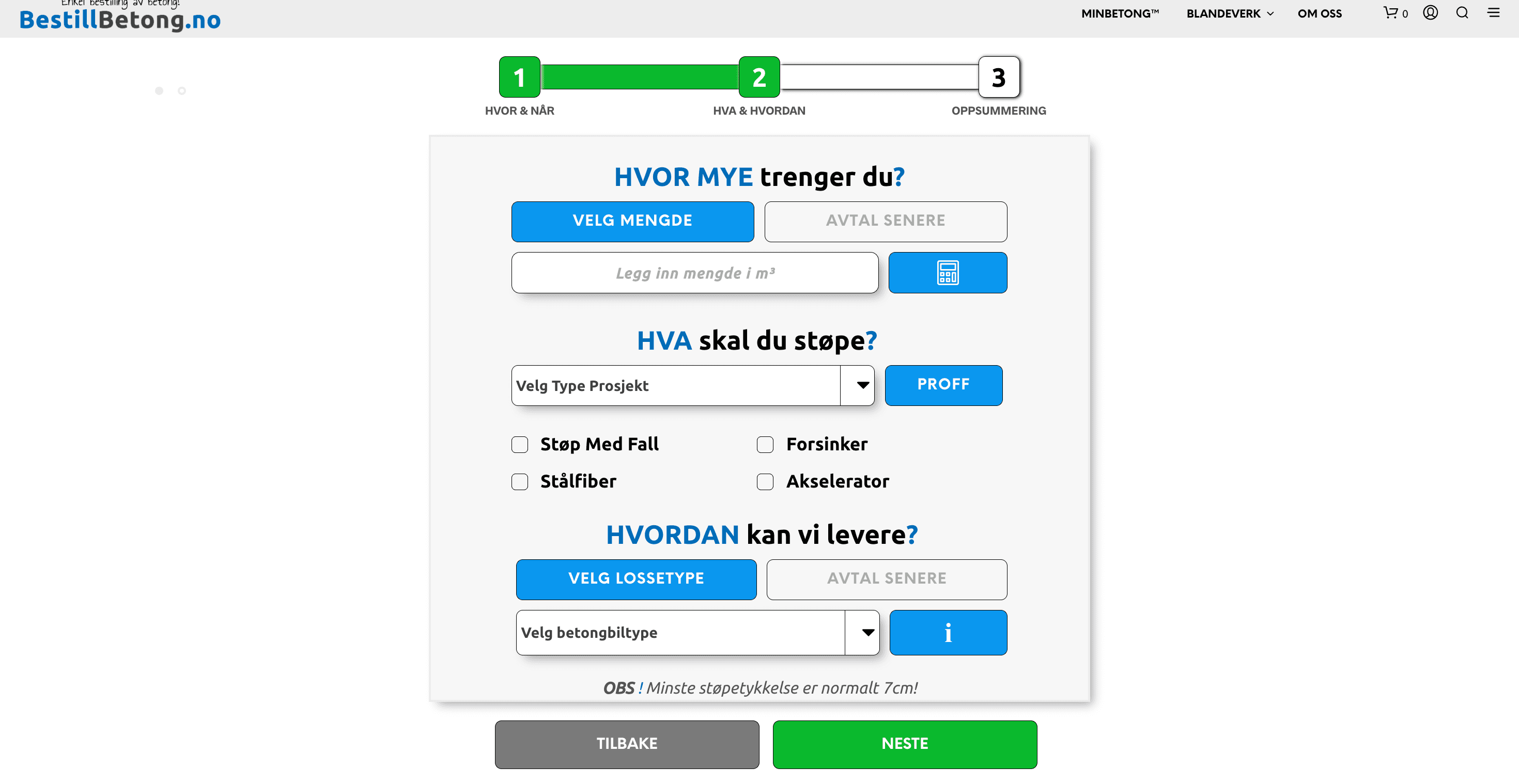
Customers start by entering a delivery address and the amount of concrete they need. If they don’t know the volume, they can calculate it by entering area dimensions, letting the system compute volume automatically.
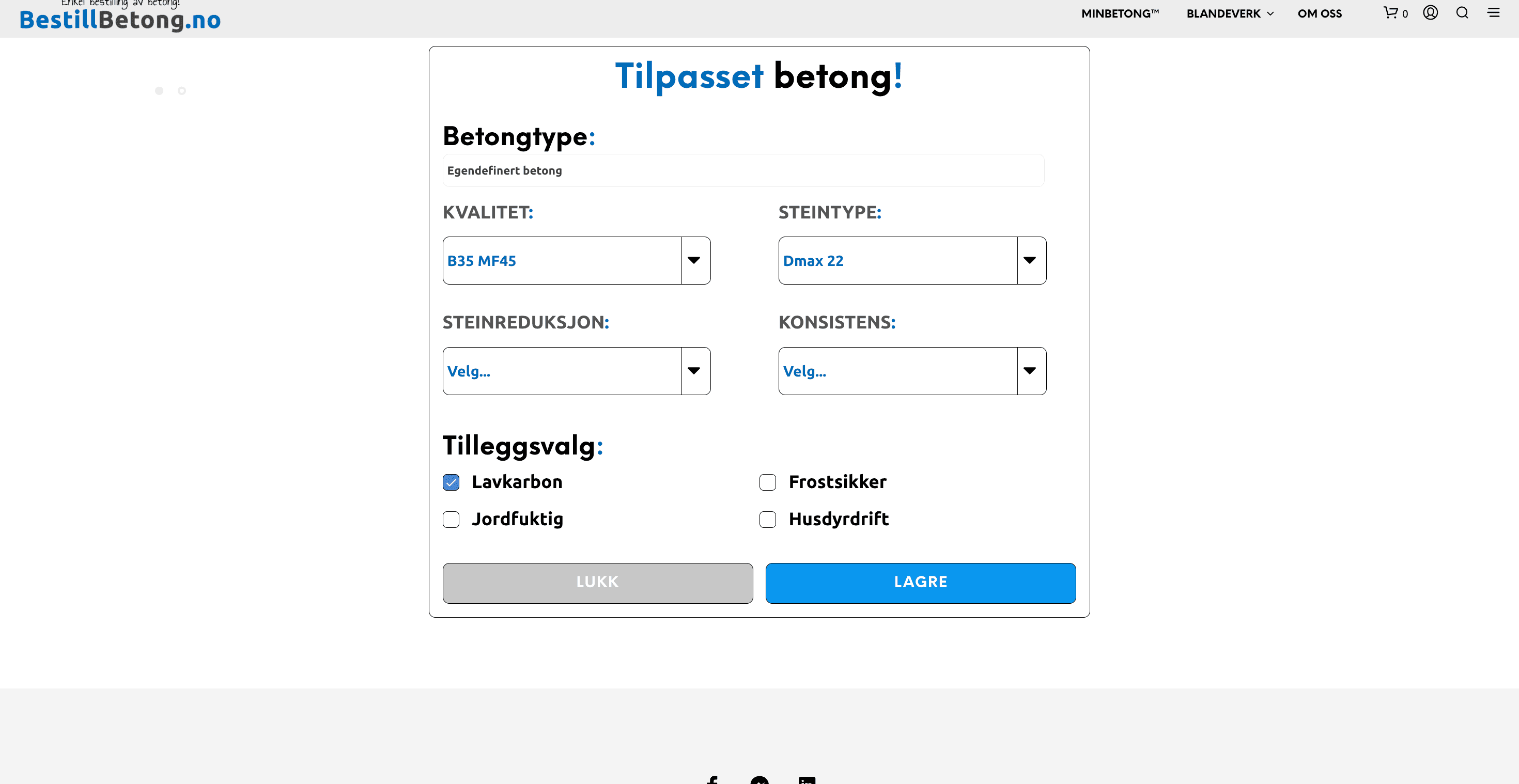
Next, they choose a concrete mix type from predefined options or build a custom mix using configured values. They then select vehicle type and optional extras such as accelerator and steel fiber.
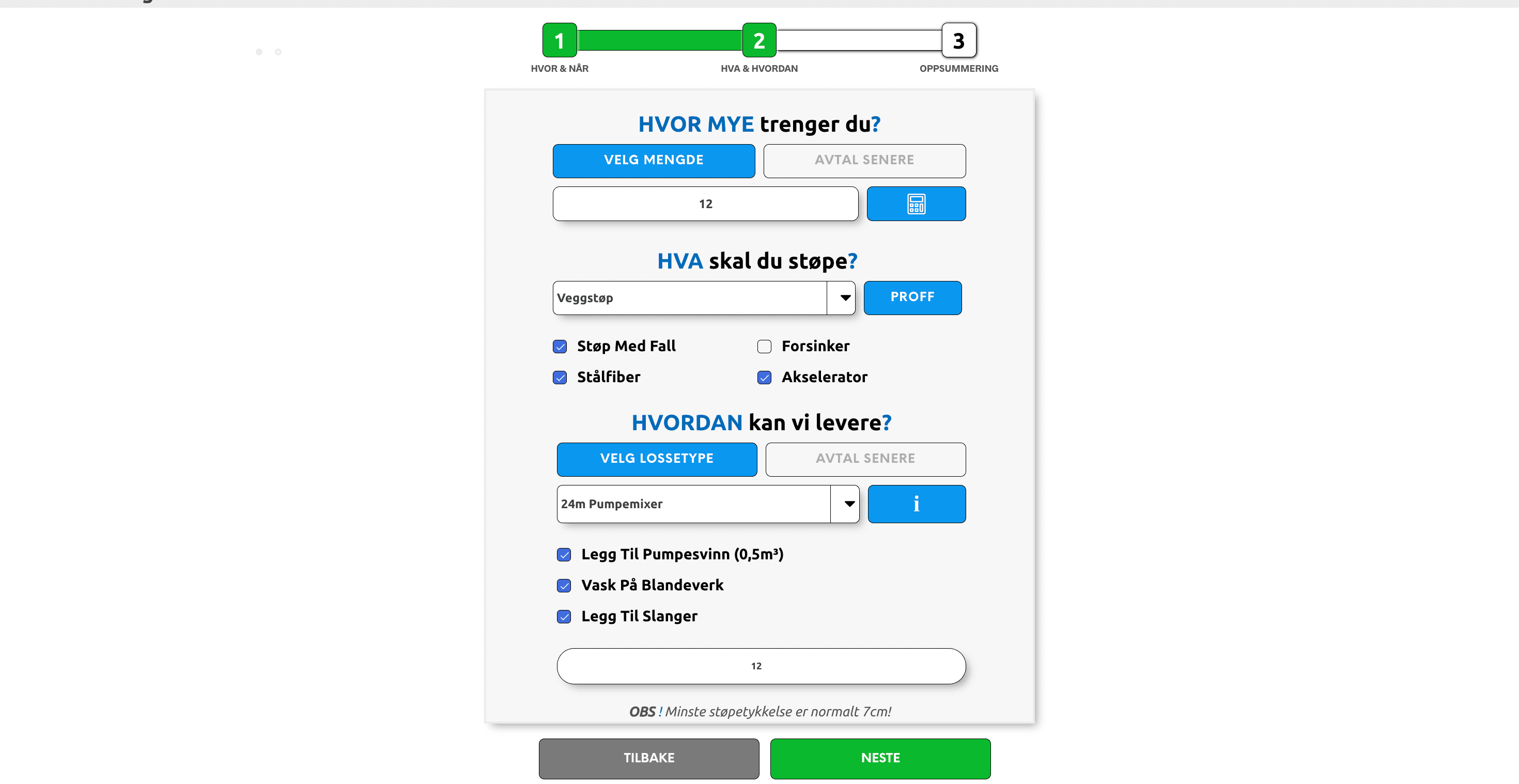
Finally, customers choose whether they need a pump mixer. If yes, they can specify the required hose size—so the system can price accurately and prepare the correct operational plan.
- Delivery address + required volume (direct or calculated by dimensions)
- Select mix type or create a custom mix
- Select vehicle type
- Add extras (accelerator, steel fiber, etc.)
- Pump mixer option + hose size configuration
2) Automated Vendor Matching and Delivery Split Planning
Once inputs are provided, the system searches for the nearest suitable vendor and calculates the total price for the order. Pricing factors include mix selection, extras, vehicle choice, and pump mixer configuration.
Because concrete is delivered by capacity-limited vehicles, the platform also calculates how many deliveries (trips) are required to deliver the full volume—splitting the order into dispatchable units automatically.
- Nearest vendor selection based on delivery address
- Dynamic price calculation from configuration inputs
- Automatic calculation of how many deliveries are required
- Order splitting into delivery-sized dispatch units
3) Admin Panel: Operations Control in Next.js
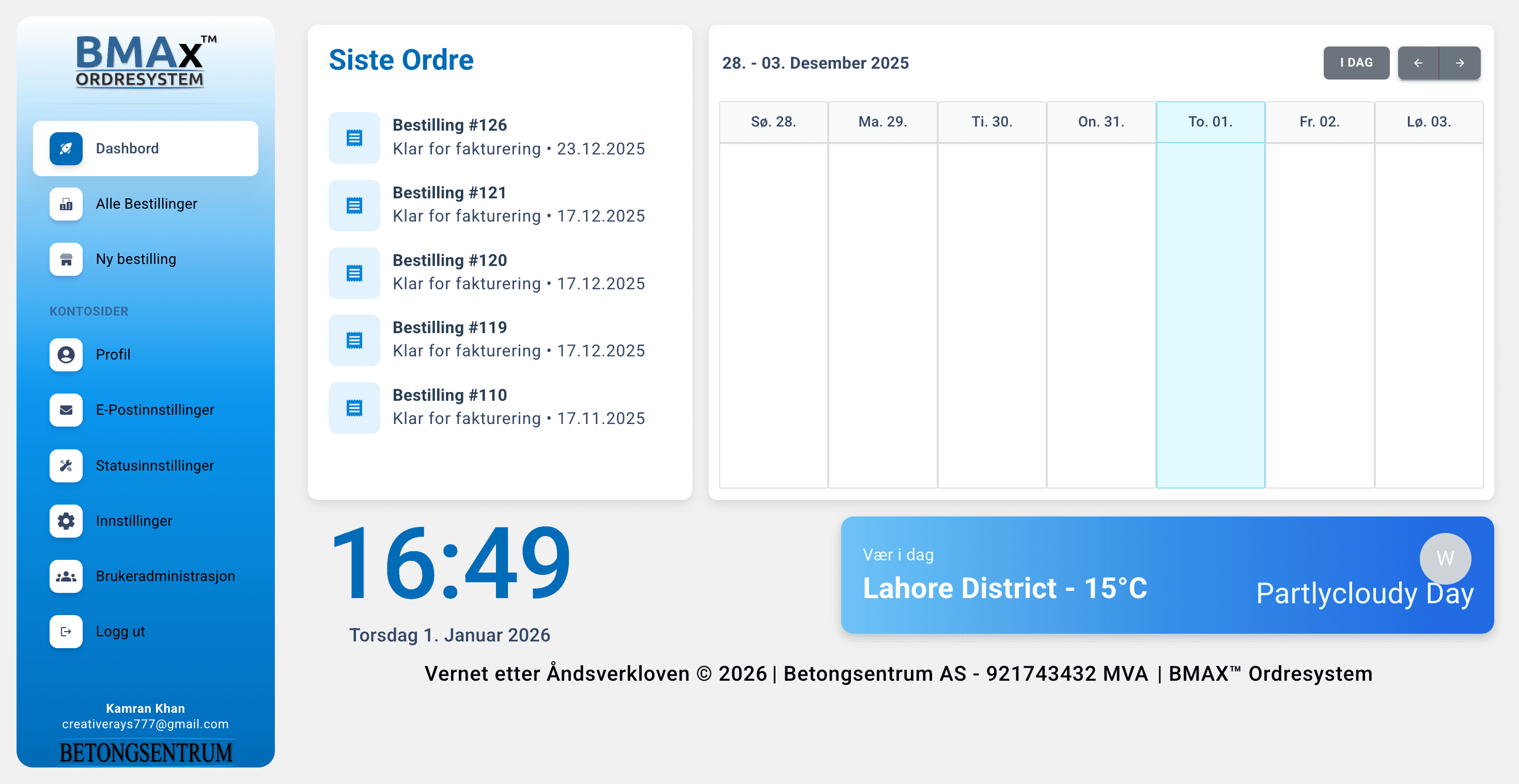
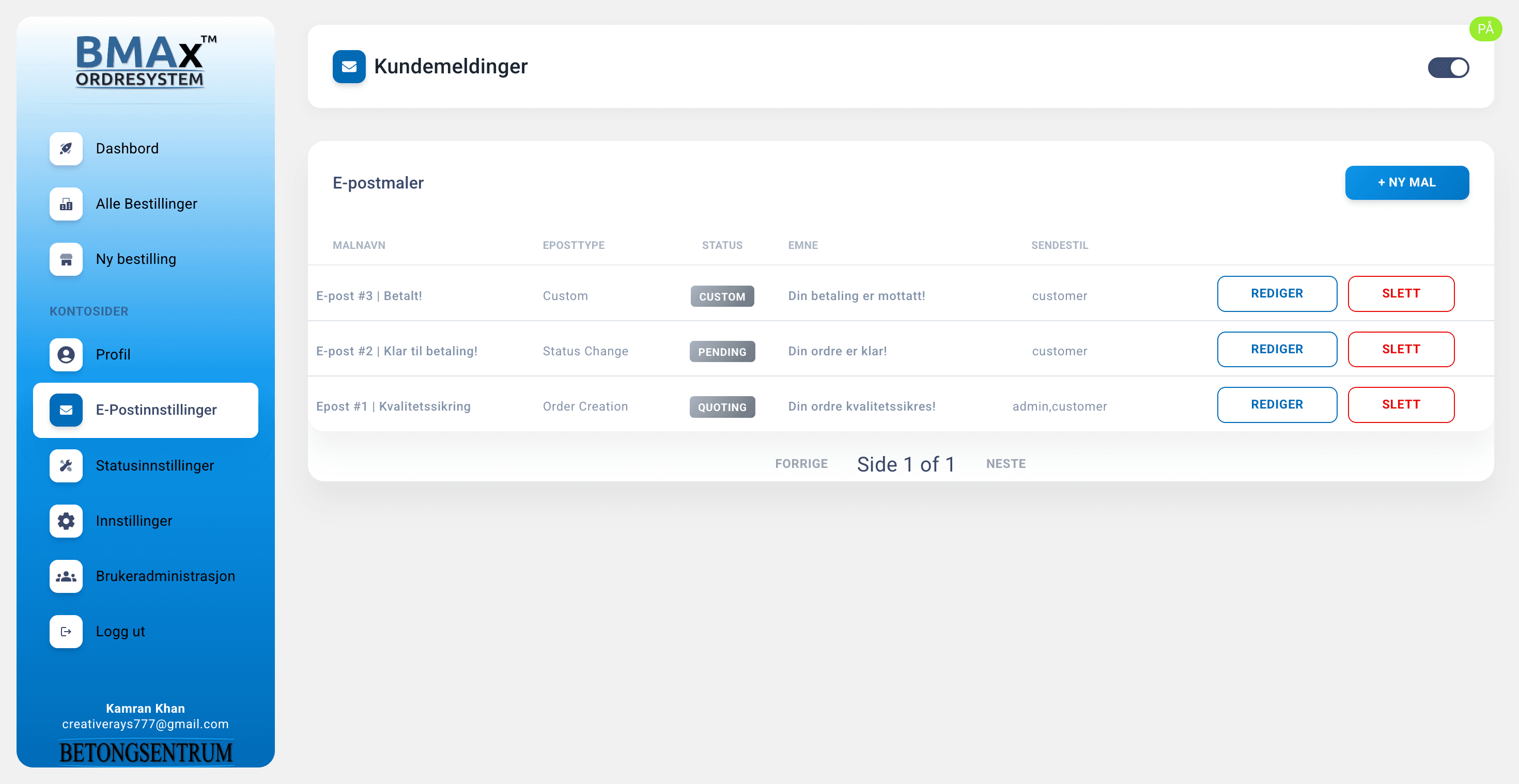
Admins manage the entire system through a dedicated Next.js admin panel. This includes vendor management, order management, pricing overrides, and system configuration.
The panel also provides tools to manage email templates, trigger notifications, and fine-tune system settings—ensuring business teams can react to market changes without needing development cycles.
- Manage vendors (add/remove/update)
- Manage orders and delivery planning
- Adjust pricing when required
- Manage system settings and configuration values
- Manage email templates and notifications
4) Multi-Channel Integration via a Central Node.js Backend
A key requirement was consistency across all user touchpoints: WordPress for the customer website, mobile apps for on-the-go ordering, and the admin panel for operational teams.
We implemented a centralized Node.js backend as the single source of truth. All channels connect to the same API layer, ensuring calculations, vendor matching, orders, and notifications remain consistent everywhere.
- Single backend powering WordPress, mobile, and admin
- Consistent calculation logic and pricing across platforms
- Unified order lifecycle with shared data model
- Scalable architecture for future expansions
Screens (Placeholder Images)

Outcome: Faster Ordering, Accurate Pricing, and Operational Control at Scale
Bmax turned a complex, manual process into a guided digital experience that customers can complete quickly without needing technical knowledge of concrete calculations.
For operations teams, automated vendor matching and delivery splitting reduced manual planning effort, while admin tools made pricing and vendor management adaptable.
By connecting WordPress, mobile, and admin tools to one Node.js backend, the platform maintains consistency and makes future expansion straightforward.
- Simplified customer ordering for a complex product
- Accurate volume calculation and mix configuration workflow
- Automated vendor matching and delivery trip planning
- Admin-controlled pricing adjustments and vendor management
- Single Node.js backend powering WordPress + mobile + Next.js admin
Tech Highlights
Overview
Ready to Start Your Project?
Let’s discuss the best stack for your business