Beyond Spreadsheets: How UK Hospitality Groups are Automating Multi-Venue Profit Sharing in 2026
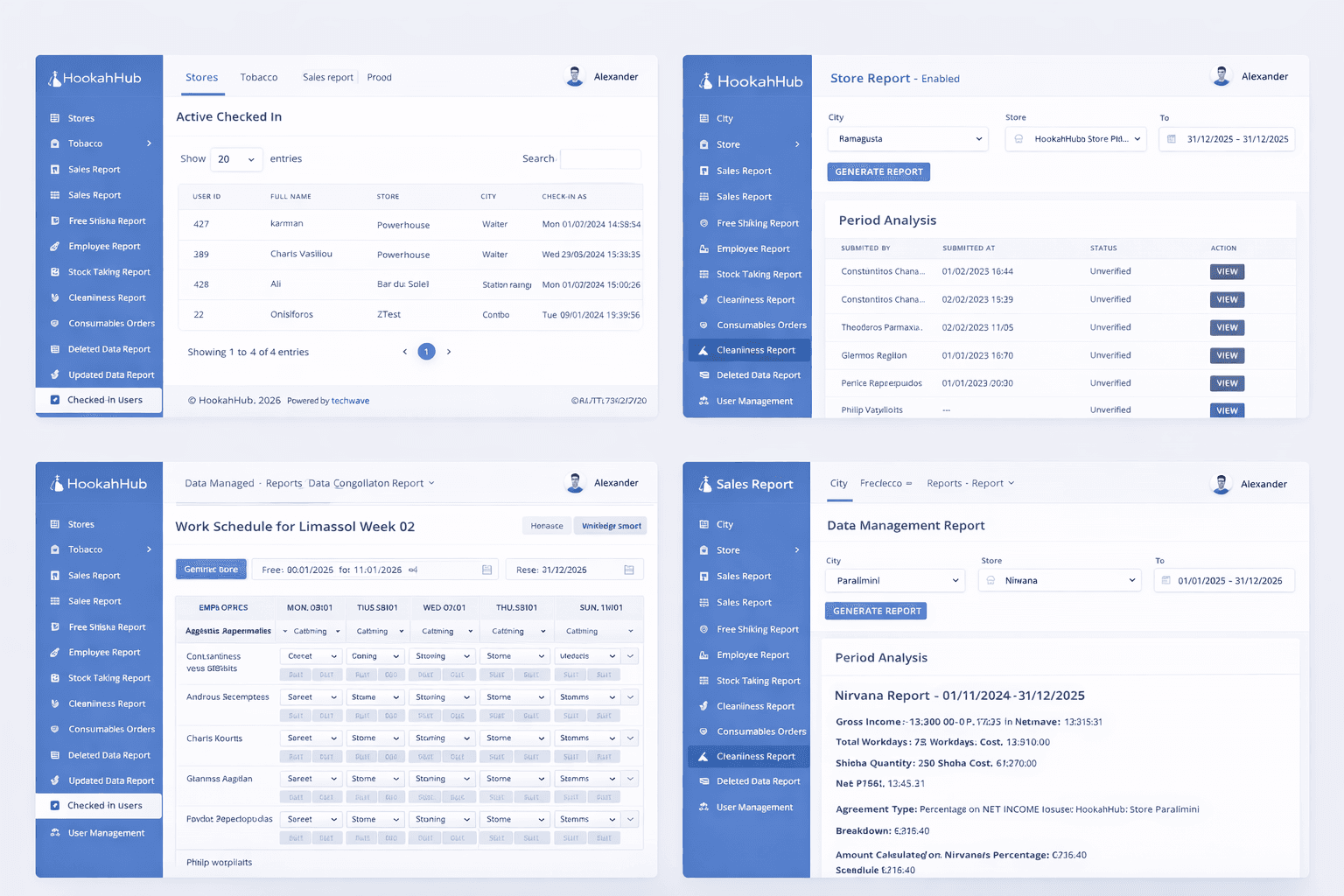
In 2026, UK hospitality operators are replacing spreadsheet-led settlements with control-tower ERPs: geo-fenced attendance, automated payroll, and multi-venue profit sharing that scales.
UK hospitality groups and service providers are automating multi-venue profit sharing in 2026 by replacing manual month-end spreadsheets with an operations ERP that connects attendance, contracts, VAT/expenses, and inventory into one workflow. The highest-impact pattern is: geo-fenced clock-in/out (100m) + manager “overseer-first” readiness checks + automated payroll + 3 settlement models (net, gross, tiered) + real-time inventory deduction. This removes admin friction, reduces disputes with venues, and gives leadership reporting strong enough to renegotiate contracts using data.
Why 2026 is the “margin squeeze” year for UK hospitality
Between rising labour costs, evolving business rates, and constant VAT pressure, the difference between a profitable quarter and a loss-making one is often operational efficiency—not just supplier pricing.
For operators managing decentralised teams (shisha service providers, contract catering, cleaning agencies, and multi-venue service models), the most expensive “silent killer” of profit is administrative friction:
- chasing attendance logs
- reconciling shift hours manually
- calculating venue-by-venue profit splits in spreadsheets
- guessing inventory shrinkage
- arguing over month-end numbers when trust is on the line
If month-end is a desk-bound marathon, scaling beyond 5–10 venues becomes painful.
The problem: the “administrative ceiling”
Most UK SMEs plateau at 5 or 10 venues because manual settlements don’t grow linearly—they grow exponentially.
When each venue has different commercial terms, human error becomes inevitable:
- Net Profit agreements (expenses + VAT deducted first)
- Gross splits (top-line revenue share)
- Tiered Performance contracts (share changes based on sales bands)
In the UK market, where partnership transparency is key, a single miscalculation can damage trust and jeopardise a venue relationship.
Our experience: building the “control tower” ERP
At Code Melodies, we built a bespoke Hospitality Operations & Workforce ERP for a high-volume operator managing 50+ remote venues. The goal was to move from gut-feeling management to measurable, auditable, data-driven control.
View the full Hospitality ERP case study
Key idea: attendance, compliance checks, payroll, inventory, and profit-sharing must live in one system—otherwise month-end remains a spreadsheet war.
1) Eliminating “ghost clocking” with geo-fencing + overseer-first workflows
In London and other major UK hubs, distributed venues and travel variance make attendance hard to verify. We implemented a strict 100-meter geo-fence:
- staff can only clock in/out when physically inside the approved radius of the venue
- clocking is tied to the person’s assigned duty location for that day
To add quality control, we added an overseer-first workflow:
- the venue manager must log in first
- on login, they complete a digital readiness checklist (supplies, equipment, hygiene)
- only then can staff start their shift
This ensures paid time is supervised time—and it creates a clean audit trail when disputes happen.
Month-end settlement breakdown by venue
Example: Geo-fenced attendance and overseer-first workflow
2) The 3-tier settlement engine: automating the money
The heart of the system is a settlement layer that mirrors real contracts—configured per venue during onboarding.
Settlement models supported
- Net Profit Share: auto-deduct expenses and VAT before splitting
- Gross Profit Share: simple top-line splits
- Tiered Performance: a “scale-up” model where shares change as sales hit thresholds
Instead of rebuilding spreadsheets monthly, admin runs a single-click month-end report that produces consistent outputs:
- venue-level breakdowns
- what the venue owes vs what the operator owes
- VAT/expense deductions (where applicable)
- exported monthly summaries for finance
Month-end settlement breakdown by venue
Example: automated month-end settlement report per venue
3) Real-time inventory vs shrinkage (the hidden profit leak)
Inventory shrinkage is a major drain on UK hospitality operations—especially for distributed consumables.
We solved it by building a POS-like ordering flow into the ERP:
- staff takes orders from tables (including complex mixes)
- every order automatically deducts stock quantities in the backend
- inventory distinguishes between consumables (tobacco/flavours) and non-consumables (devices/equipment)
Month-end settlement breakdown by venue
Example: Inventory deduction from live order
Why bespoke tech beats off-the-shelf SaaS for multi-venue settlement
Generic staff-management apps usually don’t understand your reality:
- custom flavour mixes and item-level inventory deduction
- UK-specific VAT and expense settlement logic
- drag-and-drop staff shuffling across venues and schedules
- contract-by-contract settlement rules per venue
A bespoke “control tower” system lets you:
- renegotiate using data (regional profitability and venue performance reports)
- scale without hiring admins (more venues without doubling office headcount)
- own your intelligence (reports and rules stay inside your business)
A practical starting point: what to automate first
If you’re planning automation in 2026, start in the order that reduces disputes fastest:
- Attendance proof (geo-fence + overseer-first)
- Contract-aware payroll (hourly/day contracts from validated logs)
- Venue settlement engine (net/gross/tiered)
- Inventory deduction (live ordering → shrinkage control)
- Reporting (venue, staff, region, inventory variance)
Frequently asked questions
Do I need this if I only manage 3–5 venues?
You can survive with spreadsheets at low scale, but friction compounds quickly. If month-end already takes days and creates disputes, automation pays for itself earlier than most operators expect.
Can automation reduce venue disputes?
Yes—because rules are configured upfront and outcomes are reproducible. The system produces the same settlement result every time from the same inputs.
What data do I need to get started?
At minimum: venue list + addresses, staff/manager roles, contract types, and a basic product/inventory model if you want shrinkage control.
Bottom line
If you manage remote teams across multiple UK venues and feel the weight of admin friction, it’s time to stop being a spreadsheet manager and start operating like a scalable business.
At Code Melodies, we don’t just write code—we build the engines that drive UK business growth.
Ready to automate your operations? Book a free consultation below and let’s discuss building your “control tower.”
Ready to Start Your Project?
Want a fast, SEO + AI-ready site? Let’s discuss the best stack for your business.